Thursday, April 9, 2009

A Taste of Germany: Staple Foods

In Germany, staple foods used in many regional specialties are meat, vegetables, spices, and wheat. The most popular meat consumed is pork, but other types like chicken and beef are used commonly too. Schnitzel (breadcrumb roasted pork or veal), Sauerbraten (sour roasts), Bratwurst (pork or veal sausages), and Frikadellen (meat patties) are delicious meat dishes that people eat for lunch or dinner. One specialty meat in Germany are sausages, there are over 20 kinds of sausages and are all spiced differently to give each a unique and tasty flavor. Sausage recipes can range from pork liver sausages, veal sausages, mini sausages, even blood sausages. Meat dishes are always accompanied by some kind of vegetable dish with carrots, potatoes, spinach, broccoli, white asparagus, and many kinds of cabbages. Vegetables can also be used in stews, but mainly as a side dish. Most vegetables are boiled in salt water, but some can be fried or mashed like potatoes or onions. Spices and herbs are a very important part in cooking because it gives food that unique flavor. Fresh parsley, thyme, chives, juniper berries, basil, sage, and oregano are commonly used spices and herbs in Germany. German food isn't very spicy, but can be when making mustard for sausages and using horseradish. Another important ingredient used in breakfast, lunch, dinner, and dessert cooking is wheat. Wheat can be used in cakes, bread rolls, sandwiches, basically most Germans eat food with wheat more than once a day. Bread is made in Germany everyday with over 17,000 bakeries and about 6,000 types of bread, depending on the type of wheat used. Wheat bread is usually mixed with rye flour to make breads such as Pumpernickel and Westphalian that have a special sweetish taste. Visitors should make time to try Germany's wide variety of foods that can be delicious for vegetarians too. Here is a recipe to make rotkohl (red cabbage) that goes great with meatballs, boiled potatoes, or buttered spatzle (German noodles):

Ingredients

1 small or medium head of red cabbage
4 slices bacon, chopped
1 apple, peeled, cored and chopped

1 medium yellow onion, peeled and diced
2 bay leaves

1/3 cup sugar (more to taste)

¼ cup white vinegar (more to taste)

salt and pepper

Peel the outermost leaves off the cabbage and discard. Chop the rest of the cabbage coarsely, as if for a chunky coleslaw.
Meanwhile, fry the bacon over medium heat in a large cooking pot. Once the bacon is cooked but not crisp, add the sugar and onions and cook for 1 minute, stirring constantly, until the sugar is slightly caramelized. Stir in the cabbage, apple, onion, bay leaves, sugar and vinegar, as well as generous amounts of salt and pepper. Cook on medium for several minutes until the ingredients are heated through, stirring constantly to prevent anything sticking to the bottom of the pot. Cover the pot and reduce heat to medium low. Allow the cabbage to cook for 30-40 minutes, stirring occasionally. The cabbage should still be very slightly tender-crisp. Taste and adjust seasonings accordingly; you may find that for a larger head of cabbage, more sugar and vinegar will be required.


Serve the rotkohl steaming hot. Enjoy!

http://en.wikipedia.org/wiki/German_cuisine,
http://recipes.suite101.com/article.cfm/rotkohl

Wednesday, April 8, 2009

A Taste of Germany: Drinks


In Germany, beer is a huge part of their culture, along with some non alcoholic beverages. Many centuries ago, beer was made at home by various tribes and later was made by brewmonks and brewnuns. Beer wasn't produced in large quantities until feudal lords created institutionalized brewing to earn money. Now there are over a thousand breweries and over 5,000 brands of beer to choose from. When beer is being produced, it must follow the German purity law where you can only use barley-malt, water, and hops to make beer. Much of German beer is ale, which is made by fermenting the grain marley for 3 to 4 weeks, until later lager became popular in Germany around five centuries ago. Different kinds of ale can be Weizen, Koelsch, Altbier or beer can be mixed into coke or fruit syrups. Lager is different than ale becauseof the yeast used and its fermented at lower temperatures, resulting in a stronger taste. Another popular type of beverage is wine and the majority comes from Rhine that are best known for white and red wines. Some common non alcoholic drinks are coffee and many kinds of soft drinks. Some of these soft drinks are Apfelschorle (apple juice mixed with sparkling water), Spezi (coke mixed with orange flavored drink), and other fruit juices mixed with carbonated water. Germans usually drink coffee for breakfast with some bread or during the afternoon with a slice of cake.


sources: http://en.wikipedia.org/wiki/German_cuisine
http://www.germanbeerinstitute.com/history.html

Tuesday, April 7, 2009

A Taste of Germany: Oktober Fest

Oktober fest originated in 1810 as a wedding celebration of Prince Ludwig and Princess Theresa of Saxony. The celebration was held in fields that were in front of the city gates, which were later known as "Theresa's fields". It was an exciting night filled with dancing, music, horse races, and beer. This celebration became so popular in Munich that it was held in late September and ending around the first week of October. Today, Oktober fest has grown to over a million people all over the world and has spread to many other countries like Canada and America. There are many new and entertaining things to do like go on a carnival ride, taste all the different kinds of German foods, watch performers, dress in traditional costumes, drink lots of beer, etc. People can also go into tents, where different beers and wines are served. Traditional Oktober fest food is various kinds of sausages, roasted chickens, potato dumplings, red cabbage, dampfnudel (a steamed cake served with sweet vanilla sauce), and beer. If that isn't enough to fill you up, there are many snack foods such as soft pretzels, cotton candy, potato salads, sugar-glazed almonds, steckerlfisch (grilled fish on a stick) to enjoy. Here is an easy recipe to make a favorite meat roll called rouladen that eaten as an Oktoberfest snack:

Ingredients
1 1/2 pounds flank steak
German stone ground mustard, to taste
1/2 pound thick sliced bacon
2 large onions, sliced
1 (16 ounce) jar dill pickle slices
2 tablespoons butter
2 1/2 cups water
1 cube beef bouillon
Cut the flank steak into thin filets; about 1/4 inch thick and 3 inches wide. Generously spread one side of each filet with mustard to taste. Place bacon, onions and pickle slices on each filet and form into a roll. Use string or toothpicks to hold the roll together. Heat a skillet over medium heat and melt butter. Place the rolls in the butter and saute until browned. Pour in 2 1/2 cups of water and add the bouillon cube; stirring to dissolve the bouillon cube. Simmer the rolls for about an hour. Enjoy!

sources: http://www.vistawide.com/german/oktoberfest/oktoberfest.htm
http://en.wikipedia.org/wiki/Oktoberfest
http://allrecipes.com/Recipe/German-Rouladen/Detail.aspx

Monday, April 6, 2009

A Taste of Germany: Schnitzel and Kartoffelsalat

Germany, a country in Central Europe, has had a long-lasting culture before the rise of the nation-state (country that has defined borders and people that are the same ethnically and culturally) and is presently a representative democratic republic. Ethnically, Germans are the majority but Germany is the 3rd largest home to international immigrants in the world, bringing different cultural customs and foods. One popular past time is playing or watching football and tennis. When visiting Germany, always make eye contact and shake a person's hand when meeting others to be polite. Visitors don't need to know German to get around, even though most Germans speak the native language German, over 60% know a 2nd language. Another popular thing Germany is known for is their literature and philosophy, which has always been admired by people around the world, especially in America. Famous philosophers like Marx, Engels, Nietzsche, and Gadamer have been the creators of radical ideas such as communism, existentialism, postmodernism etc. Music and and architecture has also flourished beautifully with many Renaissance and Baroque paintings; Germany furthermore pioneered the ever growing genre of music called trance. This creativity has been influenced by social and political changes, even in German cuisine. German cuisine varies on each region, which are Thuringia, Saxony, and Saxony-Anhalt. Meat, vegetables, and bread is very common in all these regions. One very delicious meat dish called schnitzel (fried and breaded veal or pork) is eaten for lunch, which is the biggest meal of the day in Germany. Lunch time is around 12 or 1pm, where many stores will close for a couple hours so people can eat at home or at a restaurant. Schnitzel is eaten with a side dish such as potato salad or meatballs. Here is a recipe to make Schnitzel with Kartoffelsalat (potato salad) as a side dish:

Ingredients:

4 veal fillets (approx each 200g)
salt and pepper
2 tbsp flour
3 eggs
150g breadbrumbs
butter, lard or cooking oil

Flatten the meat with a rolling pin or meat hammer. Season with salt and pepper and then coat in flour.

Coat in beaten egg and then coat in breadcrumbs.

Heat oil in a pan and then fry the Schnitzel on both sides until brown and the meat is cooked through. Approx. 4 mins on both sides.


Kartoffelsalat:

Ingredients

8-10 salad potatoes
1 onion
1/2 cup of warm meat broth
white wine vinegar, sunflower oil and salt to taste
pepper

Steam the potatoes in their skins until tender. If you have any potatoes from the day before, even better as they are easier to slice. Scrape them and let them cool slightly until just warm.

Chop the onion finely.

Slice the potatoes thinly with a potato slicer or a vegetable knife. Place in a large bowl.

Add the onion and enough warm meat brothso that the potatoes are quite moist but not sitting in broth! and leave to soak for an hour.
Lastly add enough sunflower oil, vinegar, salt and pepper to taste. Again I can`t give exact quantities but I suggest that you start off with a couple of tablespoons of each of the oil and vinegar and then add more to taste.

Mix thoroughly. The potato salad should not be too dry, but quite moist.

Enjoy!

sources:

http://en.wikipedia.org/wiki/Culture_of_Germany,
http://en.wikipedia.org/wiki/German_cuisine,
http://www.tasty-german-recipe.com/wiener-schnitzel-recipe.html

Friday, April 3, 2009

A Taste of Nicaragua: Snacks

Cheese is an important part of Nicaragua's food, they cook it fried, baked, or make it into creamy string cheese. A special type of cheese dish is quesillo, which is made in Nicaragua's villages Nagarote and La Paz Centro. Quesillo is a soft creamy cheese. You can use quesillo in a tasty combination of onions and sour cream wrapped in a toasted tortilla. Many street vendors sell quesillo as a snack, the most popular places are in Leon and Managua. Some history on the city Leon is it was founded by the Spanish conqueror Francisco Hernandez de Corbaba in 1524. When the city was threatened with the eruption of a volcano in 1610, people fled to where the location of Leon is today. Leon has many colonial buildings, churches, streets, and monuments, where visitors can see the beautiful architectural work of Nicaragua. Another key ingredient used in many Nicaraguan's cooking are plantains, which are related to bananas, but are larger and different in taste. Plantains are very starchy, making them great for cooking, specifically when frying or baking. Most Nicaraguans fry unripe thinly cut plantains into chips called tostones that are served with some cheese. When plantains turn yellow with dark spots, they are made into a dish called maduro, which has a sweeter taste than a regular plantain. Here is a simple recipe for maduros:

Ingredients

4 maduros (sweet bananas) peeled
3 cups milk
2 cinnamon sticks
2 cups sugar
1 teaspoon vanilla

Place maduros and milk in a bowl and boil until tender. Add the sugar, cinnamon and vanilla, boiling for another 5 minutes. Place it in a dish and bake in the oven for 30 minutes at 350°F.
Enjoy!

Next week will be on Germany! Have a great weekend.

sources:
http://www.nicaragua.com/recipes/,
http://www.vianica.com/go/specials/14-nicaraguan-fruits.html

Thursday, April 2, 2009

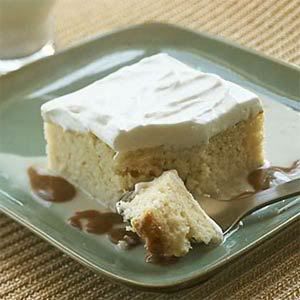
A Taste of Nicaragua: Tres de Leches

When it comes to desserts, Nicaraguans are big on using milk and sugar in their recipes, making their desserts very rich and sweet. Some of their more popular desserts are tres leches cake (cake of three milks), arroz con leche (rice pudding), flan de leche (caramel custard), maduros (baked sweet bananas), and cajeta de coco (caramelized strings of coconut and the plant yucca). Some of these desserts have also become popular in other parts of the world like America. Tres de leches is a very known cake recipe that some historians say was first made in Nicaragua and has spread to other Latin American countries with different variations. Tres de leches is where a butter cake is soaked with three different kinds of milk: evaporated, condensed, and whole milk or cream. People have found that this cake could have been used to increase sales for these types of milk during the 1850s. Tres de leches doesn't have a soggy consistency that most might think, but rather the cake soaks up the milk like a sponge, giving the cake a light texture, even though it is very fattening. Nicaraguans usually eat this cake for dessert, but also for different celebrations. Most are religious celebrations like the festival called "Fiestas Patronales", where each city honors their religion's Saint. Despite this religious celebration, most Nicaraguans go to these festivals for tradition, rather than for religious devotion. Here is a recipe to make the famous Tres Leches cake:

Ingredients:

1-½ cups All-purpose flour
1 teaspoon Baking powder
½ cup Unsalted butter

2 cups White sugar (divided)

5 Eggs

1-½ teaspoon Vanilla extract (divided)
1 cup Milk
½ of a 14-ounce can Sweetened condensed milk
½ of a 12-ounce can Evaporated milk
1/3 cup Liqueur, Frangelico, Brandy or Chambord (optional)
1-½ cups Heavy (whipping) cream

Preheat oven to 350F degrees. Grease and flour a 9x13-inch baking pan.

Sift flour and baking powder together and set aside. Cream the butter and 1 cup of the sugar together until fluffy. Add the eggs and 1/2 teaspoon of the vanilla. Beat well. Add the flour mixture to the butter mixture, 2 tablespoons at a time, mixing well until blended. Pour batter into prepared pan. Bake for 30 minutes.

When cake has finished baking, pierce it in 8 or 10 places with a fork or skewer, and let it cool. Combine the whole milk, evaporated milk, condensed milk and liqueur and pour over the top of the cooled cake. Refrigerate for at least 2 hours before serving. Enjoy!

Whipped Cream Topping: When ready to serve, combine the whipping cream and the remaining 1 teaspoon of vanilla and 1 cup of sugar, whipping until thick. Spread over top of cake.

Because of the milk in the cake, it is very important that you keep the cake refrigerated until ready to serve. Serve chilled.

sources: http://www.vianica.com/culture.php, http://www.texascooking.com/features/sept2002treslechescakerecipe.htm, http://recipes.wikia.com/wiki/Category:Nicaraguan_Desserts

Wednesday, April 1, 2009

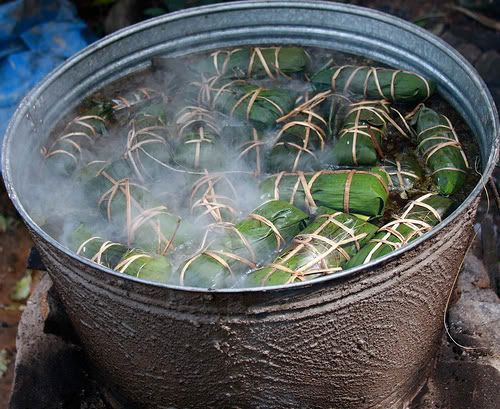
A Taste of Nicaragua: Nacatamales

A tasty and popular dish in Nicaragua are nacatamales. Nacatamales are steamed corn cakes that can be filled with meat (chicken or pork) and vegetables (tomatoes, potatoes, onions, bell peppers). After that the tamales are steamed in banana leaves, which gives the tamales a special flavor. You can add different chiles, raisins, or olives to add a spicy, yet savory flavor to the tamales. You can also add sour orange juice (naranja agria) that you can buy in a Latino store or make by using an orange and 2 limes. Usually nacatamales are eaten on Sunday mornings with some coffee or hot pinolillo. Nacatamales taste wonderful even after freezing and reheating them the next week after. Most Latin American countries have a variation of tamales, but Nicaragua's nacatamales are made bigger and are made with masa (corn) dough to add more filling to the tamale. Nacatamales can be eaten for special occasions like birthdays or weddings, basically any type of event that involves a large group of people. While most Nicaraguans use meat for the filling of nacatamales, vegetarians can substitute meat with tofu or cheese and use vegetables oil and water instead of lard (animal fat) and milk. Also if you can't find any green bananas leaves in your local supermarket, check any Asian or Latino stores. If you still can't find any, use cooking parchment paper or aluminum foil instead. Here is a recipe to make the traditional nacatamales, so make you have a couple hours to spare:

Ingredients:

2 cups of cornmeal
2 teaspoons of lime (to taste) or sour orange juice
1/4 cup of lard
1 chopped onion
2 cups of broth of your choice
2 garlic cloves minced
1 red pepper chopped
1 green pepper chopped
1 teaspoon of fresh Parsley
Pinch of paprika
1 breast of chicken, cooked and cubed
1 pound meat of pork, cooked and cubed
2 tomatoes cubed
1/2 cup of cooked Chick-peas
4 teaspoons of capers
2 cups of mashed potatoes
12 stuffed olives chopped
1/2 cup of cooked Rice
Ground pepper to taste
10 banana leaves cut into about 16" squares
Salt to taste


Cover the corn with water.
Add the lime juice and cook on low heat until the hulls start to separate from the meal.
Rinse well with cold water.
Place in pot and cover with water.
Let sit for 3 days changing the water daily.
Drain and mash the corn.
Add 1/2 of the lard, salt to taste and knead slowly adding the broth little by little until the mass is soft and homogenous.
With the remainder of the lard brown the garlic, onion, peppers.
Add the parsley, tomatoes, paprika, salt and pepper to taste.

Add the meats and remaining ingredients cook for a few minutes until hot.
Wash and cut the banana leaves in squares. In the center place a spoonful of corn mass with a couple spoonfuls of the meat mixture. Wrap well to ensure no leakage with butcher's string.
Cook in boiling water with a bit of salt for 30 minutes.
Enjoy with a glass of cold chocolate milk and fresh fruit!

sources:

http://www.whats4eats.com/breads/nacatamales-recipe, http://hubpages.com/hub/Central-America---Discover-Nicaragua